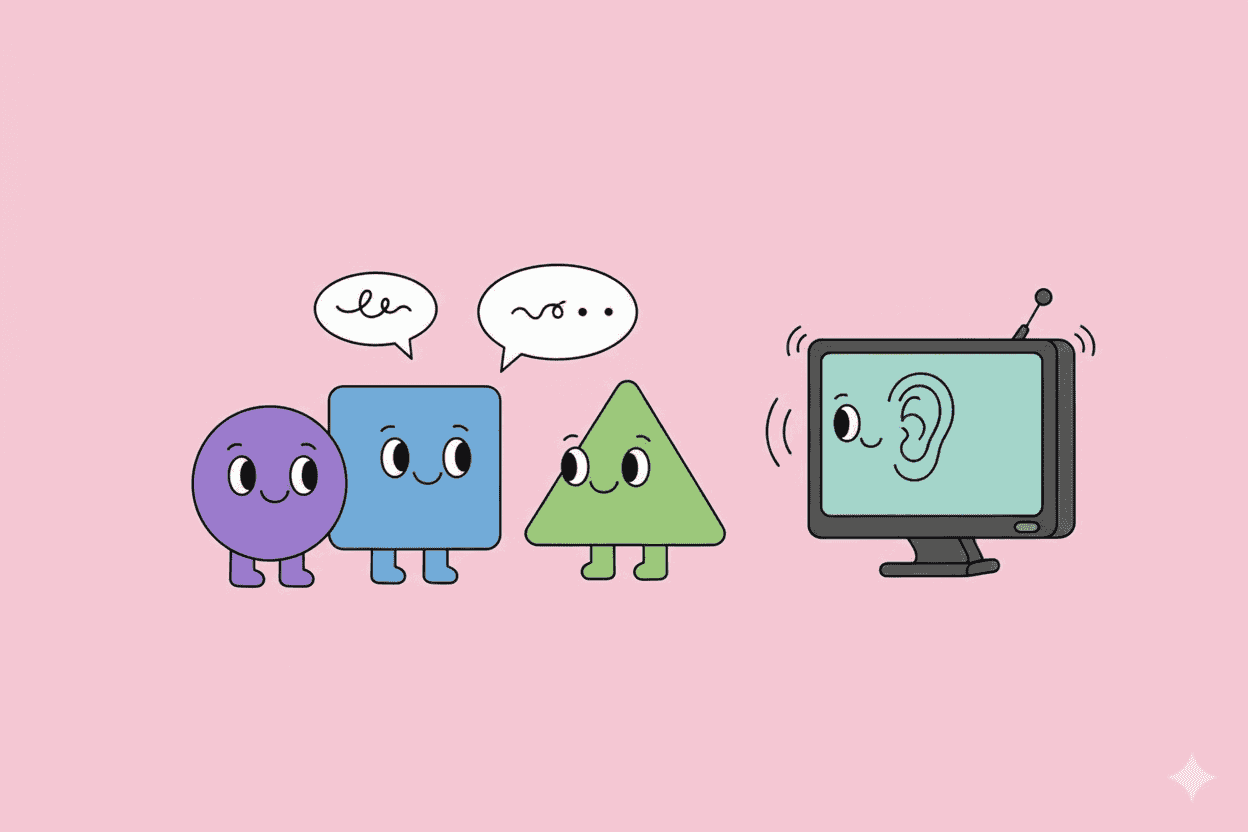
Every day, your customers tell you exactly what they need. The problem? These insights are buried in thousands of support tickets, sales calls, and chat transcripts that no human could possibly process manually.
Conversational analytics changes that equation entirely.
What Is Conversational Analytics?
Conversational analytics is the practice of using AI and natural language processing (NLP) to extract structured insights from unstructured customer conversations. Instead of manually reading through support tickets or listening to hours of sales calls, conversational analytics platforms automatically identify:
- Pain points customers mention repeatedly
- Feature requests hidden in complaint language
- Sentiment shifts indicating satisfaction or frustration
- Competitive mentions revealing market positioning
- Churn signals before customers actually leave
According to Gartner's 2025 research, companies using AI-powered conversational analytics reduce time-to-insight by 73% compared to manual analysis methods.
Why Product Teams Need Conversational Analytics
Traditional feedback collection has a fundamental flaw: it only captures what customers explicitly choose to share. Surveys get 10-15% response rates. NPS scores tell you how customers feel but not why.
Conversational analytics captures the other 85%—the insights embedded in everyday interactions that customers never thought to formally report.
The Volume Problem
A mid-sized SaaS company handles approximately:
- 500+ support tickets per week
- 50+ sales calls per week
- 1,000+ chat interactions per week
- Hundreds of social mentions per month
No product team can manually process this volume. Yet research from McKinsey shows that companies who effectively analyze customer conversations grow revenue 40% faster than competitors.
From Reactive to Proactive
Without conversational analytics, product teams operate reactively—waiting for patterns to become obvious through repeated escalations or customer churn. With conversational analytics, you identify emerging issues when they're mentioned by a handful of customers, not hundreds.
How AI Conversational Analytics Works
Modern conversational analytics platforms use several AI techniques in combination:
1. Speech-to-Text Transcription
For voice conversations (sales calls, customer success calls, support calls), AI first converts audio to searchable text. Modern transcription accuracy exceeds 95% for clear audio, making it reliable enough for business analysis.
2. Natural Language Understanding (NLU)
NLU models parse customer language to understand intent, not just keywords. When a customer says "I've been waiting forever for this to work," the system recognizes frustration about response time—even without the word "slow" appearing.
3. Topic Classification
AI automatically categorizes conversations into relevant themes: billing issues, feature requests, onboarding problems, etc. This classification happens in real-time, eliminating manual tagging.
4. Sentiment Analysis
Beyond simple positive/negative scoring, advanced sentiment analysis detects nuanced emotions: confusion, disappointment, enthusiasm, urgency. This emotional context often matters more than the literal words.
5. Trend Detection
By analyzing conversations over time, AI identifies emerging patterns before they become crises. A sudden spike in mentions of a competitor, or increasing frustration with a specific feature, becomes visible within days rather than months.
Conversational Analytics vs. Traditional Feedback Analysis
| Aspect | Traditional Analysis | Conversational Analytics |
|---|---|---|
| Data source | Surveys, NPS, explicit feedback | All customer interactions |
| Coverage | 10-15% of customers | 100% of conversations |
| Speed | Weekly/monthly reports | Real-time insights |
| Bias | Selection bias (only motivated responders) | Unfiltered customer voice |
| Scalability | Limited by human bandwidth | Unlimited |
| Cost per insight | High (analyst time) | Low (automated) |
Key Use Cases for Product Teams
Feature Prioritization
Instead of guessing which features matter most, conversational analytics quantifies how often specific capabilities are requested, by which customer segments, and in what emotional context. A feature mentioned casually differs from one mentioned with frustration about its absence.
Churn Prevention
Customers rarely announce they're leaving. But their language changes weeks before cancellation—more complaints, shorter responses, mentions of alternatives. Conversational analytics detects these signals early enough to intervene.
Competitive Intelligence
When customers mention competitors in support conversations or sales calls, they reveal positioning insights no market research can capture. "We're also looking at [Competitor]" becomes structured competitive intelligence at scale.
Onboarding Optimization
The questions new users ask reveal gaps in your onboarding flow. If 30% of support tickets in the first week involve the same setup issue, that's a product problem, not a support problem.
Win/Loss Analysis
Sales call analysis reveals why deals close or die. Pattern recognition across hundreds of calls identifies winning talk tracks, common objections, and competitive weaknesses—insights that would take months to gather manually.
Implementing Conversational Analytics
Step 1: Inventory Your Conversation Sources
Map every channel where customer conversations occur:
- Support tickets (Zendesk, Intercom, Freshdesk)
- Sales calls (Gong, Chorus, recorded calls)
- Chat transcripts (Intercom, Drift, in-app chat)
- Customer success calls
- Social media mentions
- Community forums
- App store reviews
Step 2: Choose Your Platform
Modern conversational analytics platforms like Pelin integrate with these sources automatically, eliminating manual data collection. Look for:
- Native integrations with your existing tools
- Real-time processing (not just batch analysis)
- Customizable taxonomies for your specific product
- Role-based access for cross-functional teams
- Actionable outputs (not just dashboards)
Step 3: Define Your Insight Categories
While AI handles categorization, you should define what matters for your product:
- What feature areas are most strategic?
- Which customer segments deserve separate analysis?
- What competitors should you track?
- Which sentiment signals indicate churn risk?
Step 4: Build Cross-Functional Workflows
Conversational analytics creates most value when insights flow to decision-makers:
- Product managers see feature request patterns
- Engineering sees technical complaints
- Customer success sees at-risk accounts
- Marketing sees positioning feedback
Step 5: Close the Loop
The final step is ensuring insights drive action. Set up alerts for critical signals. Create regular review cadences. Track whether conversational insights influenced roadmap decisions.
Measuring ROI
Conversational analytics ROI typically manifests in:
- Reduced churn: Catching at-risk customers earlier
- Faster prioritization: Less time debating, more data
- Higher NPS: Addressing pain points proactively
- Sales efficiency: Better competitive positioning
- Support deflection: Fixing root causes, not symptoms
Companies report 40-60% reduction in time spent on customer research after implementing conversational analytics platforms.
Common Pitfalls to Avoid
Insight Overload
More data isn't always better. Focus on actionable patterns, not comprehensive reporting. The goal is better decisions, not more dashboards.
Ignoring Context
Numbers without context mislead. A feature request mentioned 100 times by churned customers means something different than 100 mentions by your best accounts.
Analysis Paralysis
Conversational analytics should accelerate decisions, not delay them. If you're waiting for "more data" before acting on clear patterns, you're doing it wrong.
Siloed Insights
Conversational insights locked in one team's dashboard fail to create value. Build cross-functional visibility from the start.
The Future of Conversational Analytics
The field is evolving rapidly. Key trends for 2026 and beyond:
- Multimodal analysis: Combining voice tone, facial expressions (for video calls), and text for richer understanding
- Predictive capabilities: Moving from "what happened" to "what will happen"
- Generative insights: AI not just identifying patterns but suggesting actions
- Real-time intervention: Surfacing insights during conversations, not just after
Getting Started
If you're not yet using conversational analytics, you're leaving insights—and competitive advantage—on the table. Your customers are already telling you what they need. The question is whether you're equipped to hear them.
Pelin transforms customer conversations across all your channels into actionable product insights. Request access to see how conversational analytics can accelerate your product decisions.
Conversational analytics is no longer optional for product teams serious about customer-centricity. The technology has matured, the integrations exist, and the ROI is proven. The only question is how quickly you implement it.