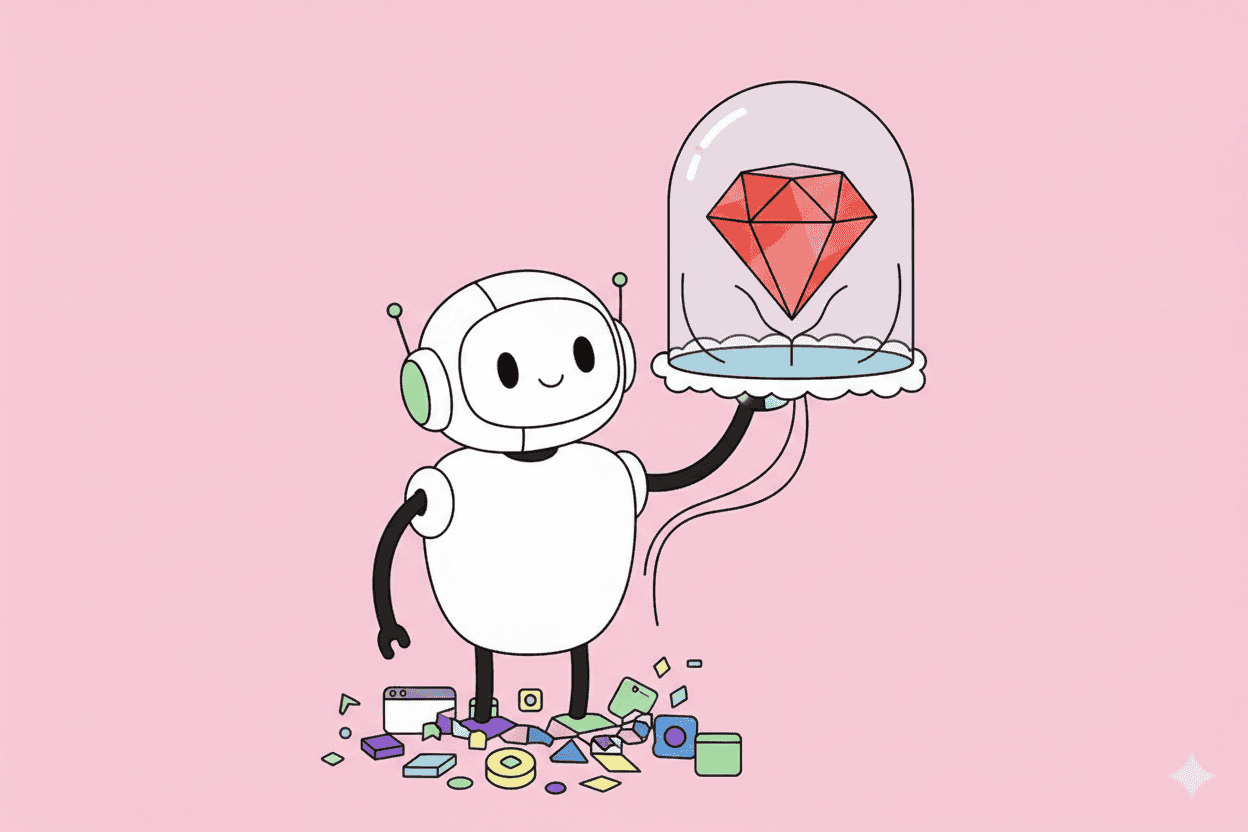
Fifteen years ago, Marc Andreessen declared that "software is eating the world." This week, that world got a reality check.
Anthropic's launch of Cowork—an autonomous AI agent that can plan and execute multi-step tasks on your computer—sent SaaS stocks tumbling. Salesforce is down 40% from its peak. Microsoft shed 12% in a single week. The message from Wall Street is clear: if AI can organize files, generate reports, and automate workflows on demand, why pay for dedicated single-purpose applications?
But here's what the market panic misses entirely.
The Automation Paradox
OpenAI's COO Brad Lightcap made a telling admission last week: "We have not yet really seen AI penetrate enterprise business processes." This from the company building the most advanced AI agents on the planet.
Think about that paradox. AI can now write code, create presentations, and even build entire internal tools from scratch. Netlify's CEO says his employees have used AI to replace SaaS products like survey and quoting tools internally. StackBlitz claims there are "many SaaS vendors we would have likely previously used that are no longer relevant."
And yet, OpenAI itself was one of the world's most active Slack users last year. The AI revolution is being coordinated through... traditional enterprise software.
What gives?
The Real Threat Isn't Technology—It's Relevance
The SaaS companies getting automated away share a common trait: they solve generic problems that any sufficiently capable AI can handle. File organization. Basic reporting. Simple workflow automation. These are commodity features, not competitive advantages.
But there's a category of problems AI can't easily solve: understanding what your specific customers actually need.
No AI agent, no matter how sophisticated, can tell you why your users are churning. It can't identify the pattern across 47 support tickets that signals a fundamental UX problem. It can't synthesize feedback from sales calls, support chats, and NPS surveys to reveal that your roadmap is pointing in exactly the wrong direction.
These aren't automation problems. They're understanding problems.
The Customer Insight Moat
Here's the uncomfortable truth most product teams are avoiding: you could build a perfect product with the most advanced AI tools available, and it would still fail if you're building the wrong thing.
The companies that will survive the AI disruption share a pattern:
They've invested in understanding, not just building.
Consider the difference between two approaches to product development in 2026:
Approach A: Use AI to build features faster. Ship more. Move faster than competitors. Hope something sticks.
Approach B: Use AI to understand customer feedback at scale. Identify actual pain points across thousands of conversations. Build fewer things, but build the right things.
Approach A is what most companies are doing. It's also why most features fail—studies consistently show that 70-80% of product features go unused.
Approach B requires something harder than technology: it requires listening.
Why Most Feedback Systems Fail
If understanding customers is so important, why don't more companies do it well?
Because traditional approaches don't scale.
Product managers are drowning in data. The average PM has access to:
- Support tickets in Zendesk or Intercom
- Sales call recordings in Gong
- Feature requests in Jira or Linear
- NPS responses via email
- Social media mentions on Twitter and LinkedIn
- Community discussions on Discord or Slack
- User research interviews (if they're lucky)
This isn't a lack of information. It's an information overload problem. Most PMs cope by sampling—reading a handful of tickets, listening to one or two sales calls, scanning a few survey responses. They're making roadmap decisions based on a tiny fraction of available customer insight.
And here's the irony: AI could solve this problem. Not by automating product decisions, but by synthesizing the signal from the noise across every customer touchpoint.
What AI-Powered Customer Understanding Actually Looks Like
Imagine a system that continuously analyzes:
- Every support conversation to identify recurring friction points
- Every sales call to surface objections and competitive mentions
- Every NPS response to understand the "why" behind the score
- Every feature request to cluster related needs together
- Every social mention to catch emerging trends
Then synthesizes all of this into actionable insights:
- "Users are confused about feature X—mentioned in 23 support tickets, 4 sales calls, and 12 NPS comments this month"
- "Competitor Y is winning deals because of Z capability—appears in 67% of lost deal analyses"
- "Three seemingly different feature requests all stem from the same underlying workflow problem"
This isn't science fiction. This is what AI is actually good at: pattern recognition across unstructured data at scale.
The Companies That Get This Right
The winners in the post-SaaS era won't be the companies with the fanciest AI features. They'll be the companies that use AI to get radically closer to their customers.
This means:
1. Treating every customer touchpoint as data
Not just surveys. Every support ticket, every sales call, every social mention, every community post. The companies with the deepest customer understanding don't just collect feedback—they connect it.
2. Looking for patterns, not anecdotes
One customer complaint is an anecdote. Fifty similar complaints are a pattern. A hundred are a product crisis. AI excels at surfacing these patterns before they become obvious.
3. Quantifying the qualitative
"Customers don't like our onboarding" is vague. "73% of churned users mentioned onboarding confusion in exit interviews, with 'overwhelming' appearing 4x more frequently than any other descriptor" is actionable.
4. Closing the loop
The best companies don't just collect insights—they act on them, then measure the impact. Did addressing that onboarding confusion actually reduce churn? Did building that frequently-requested feature increase activation?
The Uncomfortable Question
Here's what you should be asking yourself:
If an AI agent could automate your core product functionality tomorrow, what would your customers actually miss?
If the answer is "nothing we couldn't rebuild with Claude and a weekend," you have a problem.
If the answer is "they'd miss how well we understand their specific needs and continuously adapt to serve them better," you have a moat.
The Path Forward
AI isn't killing SaaS. It's killing generic SaaS. It's killing the products that could have been spreadsheets. It's killing the tools that never should have been separate products in the first place.
What AI can't kill is genuine customer understanding. It can't replace the insight that comes from truly knowing your users—their pain points, their workflows, their unstated needs.
In fact, AI makes that understanding more powerful than ever. The companies that use AI to listen better, not just build faster, are the ones that will survive.
The question isn't whether AI will disrupt your industry.
The question is whether you'll use AI to understand your customers deeply enough to stay relevant when it does.
Building a product? Stop guessing what your customers want. Pelin uses AI to synthesize insights from every customer touchpoint—so you can build what actually matters.