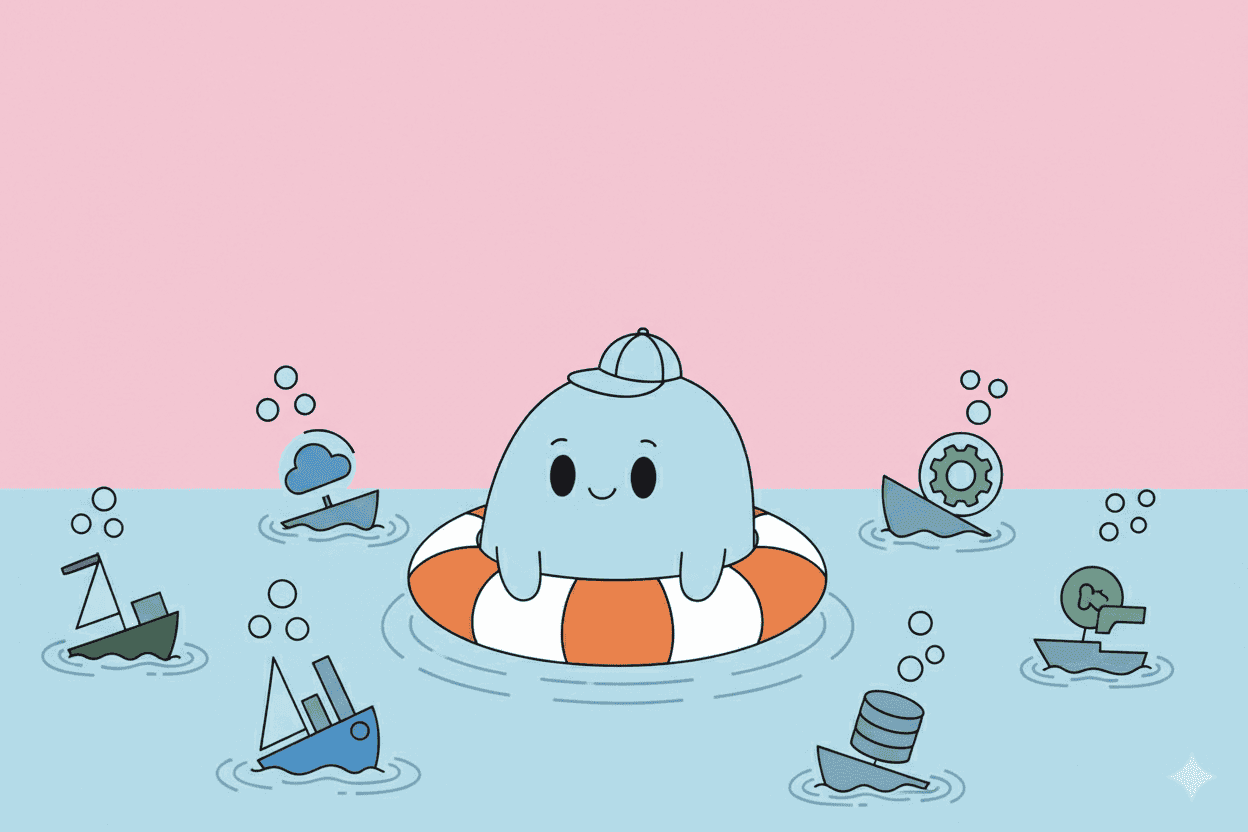
Something broke in the software industry last month.
Between January 15 and February 14, 2026, approximately $2 trillion in market capitalization evaporated from the software sector. Atlassian dropped 35%. Salesforce fell 28%. The iShares Expanded Tech-Software ETF declined 22% year-to-date—the steepest software selloff since 2022.
But this isn't a typical market correction driven by interest rates or economic fears. This is something different. Something structural.
Analysts are calling it the "SaaSpocalypse."
What's Actually Happening
AI agents aren't just automating tasks anymore. They're replacing entire software categories.
Think about it: When an AI agent can create a project ticket from a Slack conversation, assign it based on workload analysis, and follow up autonomously—why do you need project management software? When AI handles 80% of tier-1 support tickets without human intervention, what exactly is your help desk software doing?
The analysis from Digital Applied puts it bluntly: "AI agents don't operate within the SaaS tool. They replace the need for the tool entirely."
Per-seat pricing—the engine that powered SaaS revenue growth for two decades—is fundamentally threatened. One AI agent can handle the work of five CRM operators. That's not five seats anymore. That's maybe one seat for oversight. Maybe zero.
The moats that protected software companies—data lock-in, workflow integration, switching costs—are eroding as AI agents operate across platforms and migrate data seamlessly.
The Uncomfortable Question
Here's what keeps product leaders up at night: Is my product actually solving a problem, or is it just organizing busywork that AI can now do better?
Because that's the dividing line. Software that organizes data entry, routes tickets, or tracks tasks is getting replaced. Software that solves actual problems—problems that require deep understanding of what customers truly need—has a chance.
According to a recent survey of SaaS founders by Business of Apps, the companies adapting successfully share a common trait: they prioritize customer feedback and requests above competitive pressure or AI trends when deciding what to build next.
Not "can we build this?" but "should we build this now?"
The Customer Obsession Imperative
In this environment, understanding your customers isn't a nice-to-have. It's survival.
Not surface-level understanding. Not "we ran a survey last quarter." Real understanding:
- What problems keep them awake at night? Not what features they're requesting, but what underlying pain they're trying to solve.
- Why are they actually churning? Not the exit survey checkbox—the real reason they left.
- What workflows are they hacking together? Where are they using your product in ways you didn't intend?
- What are they saying when they think you're not listening? Support tickets, sales calls, community forums, social mentions.
The companies surviving the SaaSpocalypse aren't the ones with the best AI features. They're the ones who understand their customers deeply enough to build things AI agents can't replicate.
Why Most Teams Get This Wrong
Here's the problem: Most product teams think they understand their customers. They don't.
They have data. Lots of it. Usage metrics, NPS scores, support tickets, sales call recordings, Slack messages, Intercom chats, survey responses. It's scattered across twelve different tools. Nobody has time to synthesize it.
So what happens? Decisions get made based on:
- The loudest stakeholder's opinion
- Whatever the biggest customer demanded last week
- Competitor feature lists
- Gut feeling disguised as "product intuition"
Meanwhile, actual customer insights—the patterns that would tell you where to invest—sit buried in data nobody has bandwidth to analyze.
This was always a problem. Now it's a fatal flaw.
The New Competitive Advantage
In a world where AI can build basic software features faster than ever, your competitive advantage shifts dramatically.
It's no longer about shipping features fast. AI can do that.
It's no longer about operational efficiency. AI agents are handling that.
Your advantage is knowing what to build. Understanding customer problems at a depth your competitors don't. Seeing patterns in feedback that others miss. Prioritizing based on real pain, not perceived importance.
The Business of Apps study found that successful founders are "deliberately cautious, waiting for clearer signals around ROI, readiness, and integration complexity." They're not chasing AI trends. They're solving validated problems.
Practical Steps for Product Teams
So how do you actually become customer-obsessed in a way that matters? Here's what works:
1. Centralize Your Customer Intelligence
Stop letting insights rot in silos. Your support team knows things your product team doesn't. Your sales calls contain patterns your PMs have never heard. Your community forum has feature requests that never made it to the roadmap.
Get it all in one place. Not manually—you don't have time for that. Use AI to synthesize it, tag it, and surface what matters.
2. Look for Pain, Not Feature Requests
Customers are bad at designing solutions. They're excellent at describing pain.
When someone asks for "a Slack integration," dig deeper. Why? What workflow are they trying to enable? What's the underlying problem they're solving?
The answer might lead you somewhere completely different—somewhere more valuable, somewhere AI agents can't easily replicate.
3. Treat Churned Customers Like Gold
Exit surveys are useless. You know what's not useless? The patterns across 200 churned customers' support histories over the past year.
What were they complaining about three months before they left? What features did they never adopt? What did their usage patterns look like compared to retained customers?
This is intelligence hiding in plain sight.
4. Build Feedback Loops Into Everything
Don't wait for quarterly surveys. Instrument your product to understand confusion points in real-time. Track where users get stuck. Monitor sentiment shifts in support conversations.
The faster you can detect problems, the faster you can respond—before customers give up and leave.
5. Make Customer Insights Everyone's Job
Product managers shouldn't be the only people who talk to customers. Engineers should see support tickets. Designers should listen to sales calls. Leadership should read churned customer feedback.
When the whole team understands customer pain, you make better decisions at every level.
The Path Forward
The SaaSpocalypse isn't about AI killing software companies. It's about AI exposing which companies were solving real problems and which were just organizing digital paperwork.
The survivors will be the ones who know their customers so well that they can build things AI agents can't easily replicate—not because the technology is hard, but because the understanding is hard.
Atlassian didn't drop 35% because Jira's features are bad. They dropped because investors are questioning whether AI agents need Jira at all.
The answer, for some use cases, might be no.
But for the problems that actually require understanding—understanding customers, understanding context, understanding the messy reality of how teams work—there's still a massive opportunity.
You just have to know where to look.
This is what Pelin does: connect your customer feedback sources, let AI surface the patterns and insights that matter, and make customer intelligence accessible to your entire team. No more guessing what to build. No more insights rotting in silos. See how it works.