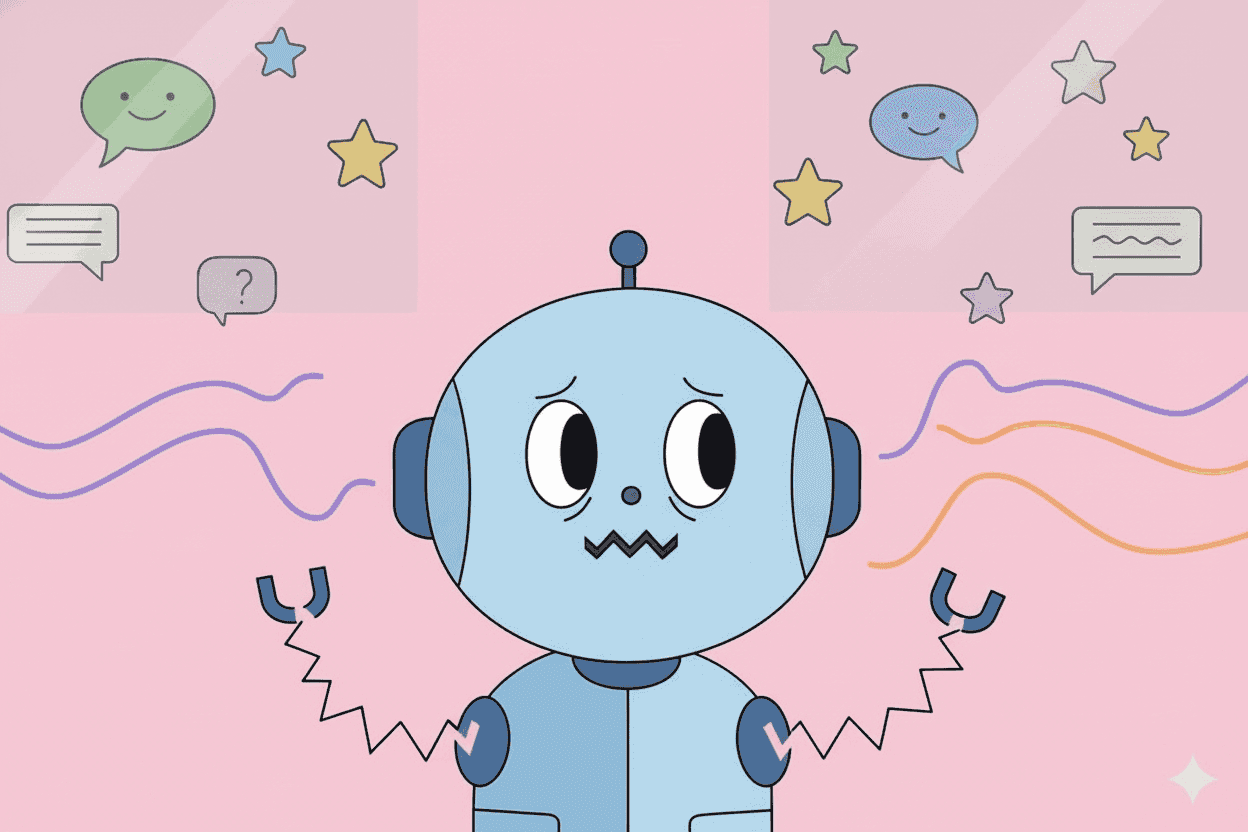
The agentic AI revolution isn't coming. It's already here.
According to G2's latest research, 57% of companies now have AI agents running in production. Not in pilots. Not in "innovation labs." In production, handling real work, making real decisions. The agentic AI market is projected to hit $47 billion by 2030—and that number keeps getting revised upward.
But here's what's interesting: while companies are racing to deploy AI agents everywhere, most are struggling to scale them. The bottleneck isn't the technology. It's something far more fundamental.
They don't actually understand their customers.
The Data Problem Nobody's Talking About
Leandro Perez, Salesforce's CMO for Australia and New Zealand, recently identified four traps that stall AI agent adoption. Number three on his list? Neglecting data readiness.
"The agent is only as good as the data," Perez told G2. "If you don't have that paired with the data, then the agent is kind of just really smart, but doesn't actually have the context to be personalized."
Let that sink in. The companies deploying these sophisticated AI systems—systems that can schedule meetings, handle customer support, route tickets, and orchestrate multi-step workflows—are failing because they can't answer a basic question:
What do our customers actually want?
It's almost poetic. We've built digital employees that can execute tasks with superhuman efficiency. But we haven't given them the one thing they need to execute the right tasks: customer context.
From Production to Scale: Where Deployments Stall
G2's report found that 83% of buyers are satisfied with agent performance. That's impressive. But satisfaction in a pilot is very different from success at scale.
The gap between "we deployed an agent" and "our agents are transforming the business" comes down to three things:
- Data readiness – Does the agent have access to real customer insights?
- Governance – Can you monitor what the agent is doing and why?
- Organizational change – Has your team adapted to work alongside AI?
Most companies nail #2 and #3 eventually. They set up monitoring dashboards. They create AI governance committees. They run change management workshops.
But #1? Data readiness? That's where everything falls apart.
Why? Because most companies don't have clean, organized, actionable customer feedback. They have:
- A Notion doc from 2023 with "customer feedback" in the title
- 47 open Slack threads about what users want
- A backlog full of feature requests that nobody's triaged
- Survey results that live in a spreadsheet somewhere
- Support tickets that get resolved and forgotten
This isn't data readiness. This is data chaos.
The Voice of Customer Gap
Here's the uncomfortable truth about AI agents: they expose every gap in your customer understanding.
An AI sales agent can't personalize outreach if you don't know what pain points resonate with different segments. An AI support agent can't deflect tickets effectively if you don't understand the common issues driving customer frustration. An AI marketing agent can't craft compelling messages if you don't know what language your customers actually use.
Recent data from HubSpot shows that 62% of customer service professionals say AI helps them understand buyers better. But that assumes you're feeding the AI meaningful customer data in the first place.
The companies succeeding with AI agents aren't just investing in better technology. They're investing in better customer intelligence. They're treating voice of customer (VoC) as a critical input to their AI strategy, not an afterthought.
What Product Teams Get Wrong About AI Readiness
Product managers are particularly guilty of thinking they're "AI ready" when they're not.
They'll say things like: "We have a feedback channel in our app." Great. When did you last analyze it? "We do customer interviews." Excellent. Where do those insights live? "We track NPS." Cool. What are you actually doing with that data?
The bar for AI readiness isn't "we collect customer feedback." It's "we can surface relevant customer insights in seconds, structured in a way that machines can understand and act on."
Most product teams aren't even close.
Consider what's required to make an AI agent effective in a product context:
- Structured feedback taxonomy – Not just "users want X" but categorized, tagged, and prioritized insights
- Sentiment analysis – Understanding not just what customers say but how they feel
- Trend detection – Spotting emerging patterns before they become crises
- Segment mapping – Knowing which feedback comes from which customer types
- Impact scoring – Quantifying how feedback relates to business outcomes
Building this manually? Months of work. Maintaining it? A full-time job (at least).
No wonder companies are starving their AI agents. They can barely feed their product roadmaps.
The New Stack: Customer Intelligence as Infrastructure
Bijou Barry, Research Principal at G2, frames it perfectly: "What started as a race to build capable agents is becoming something more interesting: Agents are becoming a capability layer within the stack, not a product category unto themselves."
If agents are a capability layer, then customer intelligence is the data layer they need to function.
Think about it this way. Ten years ago, you couldn't run a serious SaaS business without a CRM. Five years ago, you couldn't run one without a product analytics tool. Today, you can't run one without a customer intelligence platform.
This isn't about having a nice-to-have "feedback tool." It's about having infrastructure that:
- Aggregates customer signals from every source (support, sales, product, social)
- Analyzes those signals automatically using AI
- Activates insights by pushing them to the systems that need them—including your AI agents
The companies that figure this out first will have a massive advantage. Their AI agents will be smarter, more personalized, and more effective—because they'll actually know who they're serving.
Three Steps to AI-Ready Customer Intelligence
So how do you get there? Here's a practical framework:
1. Centralize Your Feedback Streams
Every customer signal should flow into one place. Support tickets, survey responses, sales call transcripts, app store reviews, social mentions, in-app feedback—all of it. If customer insights are scattered across twelve different tools, they might as well not exist.
2. Structure Your Insights Automatically
Manual tagging doesn't scale. You need AI-powered analysis that can categorize feedback, detect sentiment, identify trends, and score impact automatically. This isn't optional—it's table stakes for AI readiness.
3. Create Feedback Loops to Your AI Systems
Customer intelligence shouldn't sit in a dashboard waiting for someone to look at it. It should actively inform your AI agents, your product roadmap, your support workflows. The most advanced companies are building direct integrations between their customer intelligence platforms and their agentic AI systems.
The Bottom Line
The agentic AI revolution is real. But it won't be won by the companies with the fanciest AI models or the biggest engineering teams.
It'll be won by the companies that understand their customers.
As Perez put it, you need to think of agents "much like you would treat an employee." And what does every effective employee need to do their job? Context. Understanding. Knowledge of who they're serving and why.
Your AI agents are only as good as your customer intelligence. If you're starving them for context, you're setting them up to fail.
The question isn't whether you should deploy AI agents. It's whether you're ready to feed them.
Building a product and struggling to keep up with customer feedback? Pelin turns scattered customer signals into actionable insights—automatically. So when you're ready to deploy AI agents that actually understand your users, you'll have the data they need.