Here's a number that should keep product leaders up at night: according to G2's 2026 Expert Survey on AI in Churn Reduction, customers using AI-powered insights in their daily workflows achieved up to 15% churn reduction. Some platforms reported improvements as high as 25%.
Now here's the part that actually should keep you up: most teams aren't seeing these results. Not because the AI doesn't work, but because they're not acting on what it tells them.
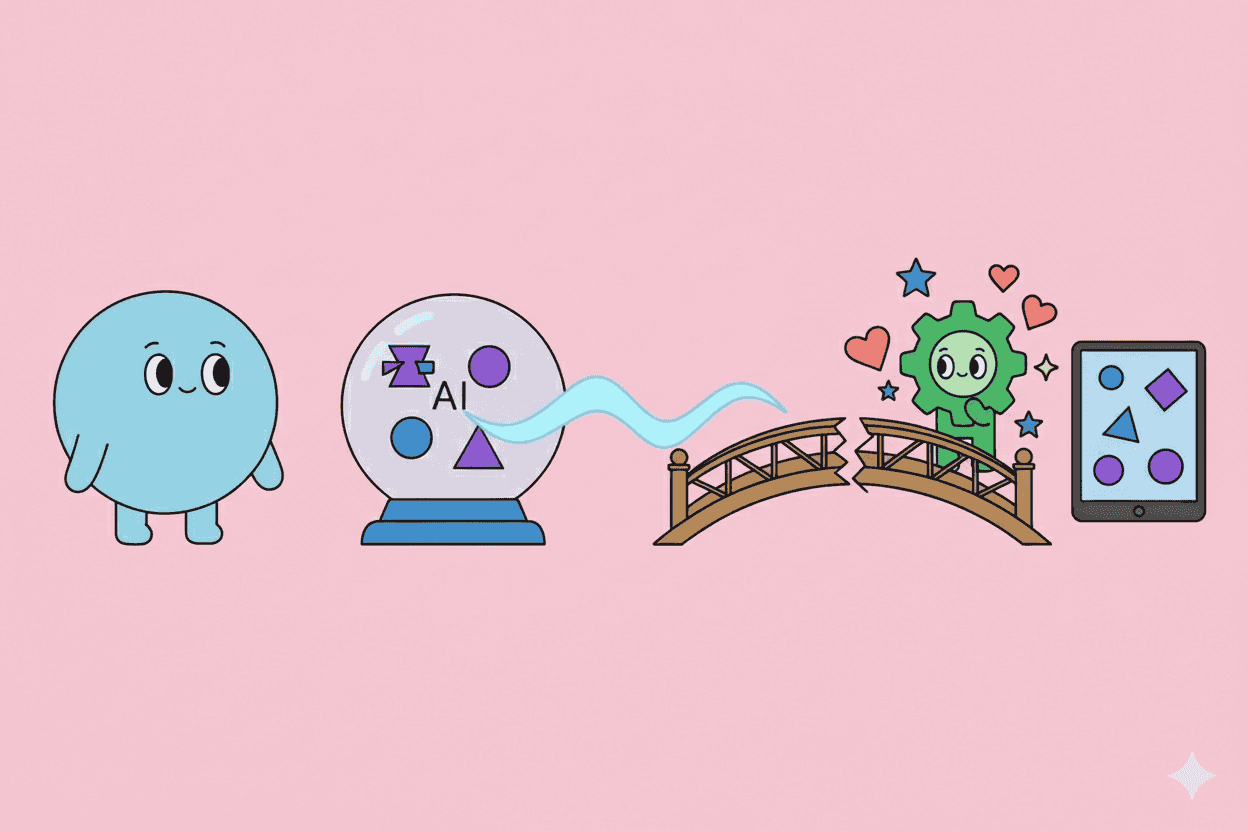
Welcome to the action gap—the graveyard where perfectly good churn predictions go to die.
The Insight-to-Action Problem
G2's survey of leading customer success platforms—ChurnZero, Custify, Chargebee, and Velaris—uncovered something that product teams intuitively know but rarely address directly: the biggest barrier to better churn prevention isn't the lack of data or sophisticated models. It's the gap between insight and consistent action at scale.
Think about your own workflow. How many dashboards do you have open right now? How many "at-risk customer" alerts have you acknowledged in the last month? And how many of those actually translated into meaningful intervention?
This is the dirty secret of modern product management. We're drowning in signals but starving for action.
What Actually Predicts Churn
Before we talk solutions, let's understand what the AI is actually looking at. The G2 survey found that the strongest churn predictors aren't isolated metrics—they're patterns across multiple dimensions:
1. Product Usage Drops This seems obvious, but the nuance matters. It's not about absolute usage; it's about changes in usage patterns. A customer who goes from daily active to weekly active is at higher risk than one who was always a light user.
2. Onboarding Friction This is where churn often starts—before the customer has even fully arrived. Research from HubSpot's 2026 State of Marketing report shows that time-to-value is becoming the critical metric, with AI tools now capable of predicting churn likelihood during the onboarding phase itself.
3. Feature Adoption Decline When customers stop exploring new features, they're signaling that your product has plateaued in value for them. They've extracted what they need. The countdown to churn has begun.
4. Sentiment Shifts This is where qualitative data becomes quantitative. Modern AI systems analyze support tickets, NPS responses, and even email tone to detect satisfaction trends before they show up in usage metrics.
5. Billing Behavior Late payments, downgrades, and payment method changes are often the most reliable—and most ignored—leading indicators of churn.
Why Predictions Alone Aren't Enough
Here's the uncomfortable truth: having a 95% accurate churn prediction model is worthless if your team can't act on it.
The G2 survey found that the most successful implementations share a common trait: they embed AI insights directly into daily workflows. It's not enough to have a dashboard that shows risk scores. The insight needs to arrive at the moment of action, with context about what to do next.
Consider the difference:
Approach A: A weekly report shows 47 accounts are at elevated churn risk. Your CS team adds it to their queue of things to investigate when they have time. (Spoiler: they never have time.)
Approach B: When a CSM opens an account, they immediately see the churn risk score, the specific signals driving that score, and a recommended playbook based on similar successful interventions. The action is embedded in the workflow.
According to the survey, teams using the second approach saw a 33% improvement in time-to-value compared to those relying on separate reporting tools.
The Voice of Customer Connection
This is where product teams often miss the bigger picture. Churn isn't just a customer success problem—it's a product signal.
Every churning customer is telling you something about where your product fails to deliver value. The challenge is that individual churn reasons are noisy and anecdotal. But aggregate them with AI, and patterns emerge:
- "It doesn't integrate with our other tools" → Integration gaps
- "We've outgrown the basic tier" → Pricing/packaging misalignment
- "Our team found it too complicated" → Onboarding and UX debt
- "We needed feature X" → Roadmap priorities
This is where voice of customer analysis becomes essential. When you can automatically categorize and quantify the reasons behind churn, you're not just predicting who will leave—you're learning how to make fewer people want to.
Practical Steps to Bridge the Gap
Based on what's working for teams that successfully reduced churn, here's a framework for closing the action gap:
1. Consolidate Your Signals
Stop checking five different tools for customer health. The G2 survey showed that platforms consolidating product usage, support interactions, sentiment data, and billing information into unified health scores dramatically outperform those with fragmented data.
What this looks like in practice:
- Choose a single source of truth for customer health
- Pipe in all relevant signals: product analytics, support tickets, NPS, billing events
- Create composite health scores that weight signals appropriately for your business
2. Make Risk Actionable
A risk score is useless without context. For every at-risk segment, your team needs:
- What's driving the risk (not just the score, but the contributing factors)
- Recommended actions based on similar successful interventions
- Timeline urgency showing the window for effective intervention
3. Embed Insights in Workflows
This is the critical piece most teams miss. Insights shouldn't live in dashboards—they should appear in the tools your team already uses.
That means:
- Churn risk visible in your CRM/CS platform, not buried in analytics
- Automated alerts that trigger at the right moment, not in a weekly digest
- Playbook recommendations that appear contextually, not in a separate knowledge base
4. Close the Feedback Loop
Finally—and this is where product teams add unique value—use churn data to improve the product itself.
Every month, aggregate your churn reasons. Look for patterns. Feed them back into your roadmap prioritization. The best churn reduction strategy isn't just better retention tactics; it's building a product people don't want to leave.
The 2026 Landscape
HubSpot's marketing predictions suggest that by the end of 2026, AI systems will be able to plan, execute, and optimize full campaigns—including retention campaigns—without constant human input.
But we're not there yet. For now, the competitive advantage belongs to teams who can bridge the gap between what AI knows and what humans do about it.
The platforms winning at churn reduction aren't the ones with the most sophisticated models. They're the ones who've figured out how to turn predictions into playbooks, and playbooks into actions.
The Bottom Line
Your AI probably already knows which customers are at risk. The question is whether your organization is structured to act on that knowledge fast enough to matter.
The 15-25% churn reduction numbers from the G2 survey aren't aspirational—they're achievable. But they require treating churn prediction as the beginning of the process, not the end.
Start with your signals. Consolidate them. Make them actionable. Embed them in workflows. And most importantly, close the loop by turning churn patterns into product improvements.
The action gap is where good predictions go to die. Don't let yours be next.
Struggling to turn scattered customer feedback into actionable product insights? Pelin uses AI to automatically analyze customer conversations across all your channels, surfacing the patterns that predict churn—and the product opportunities hidden in customer feedback.