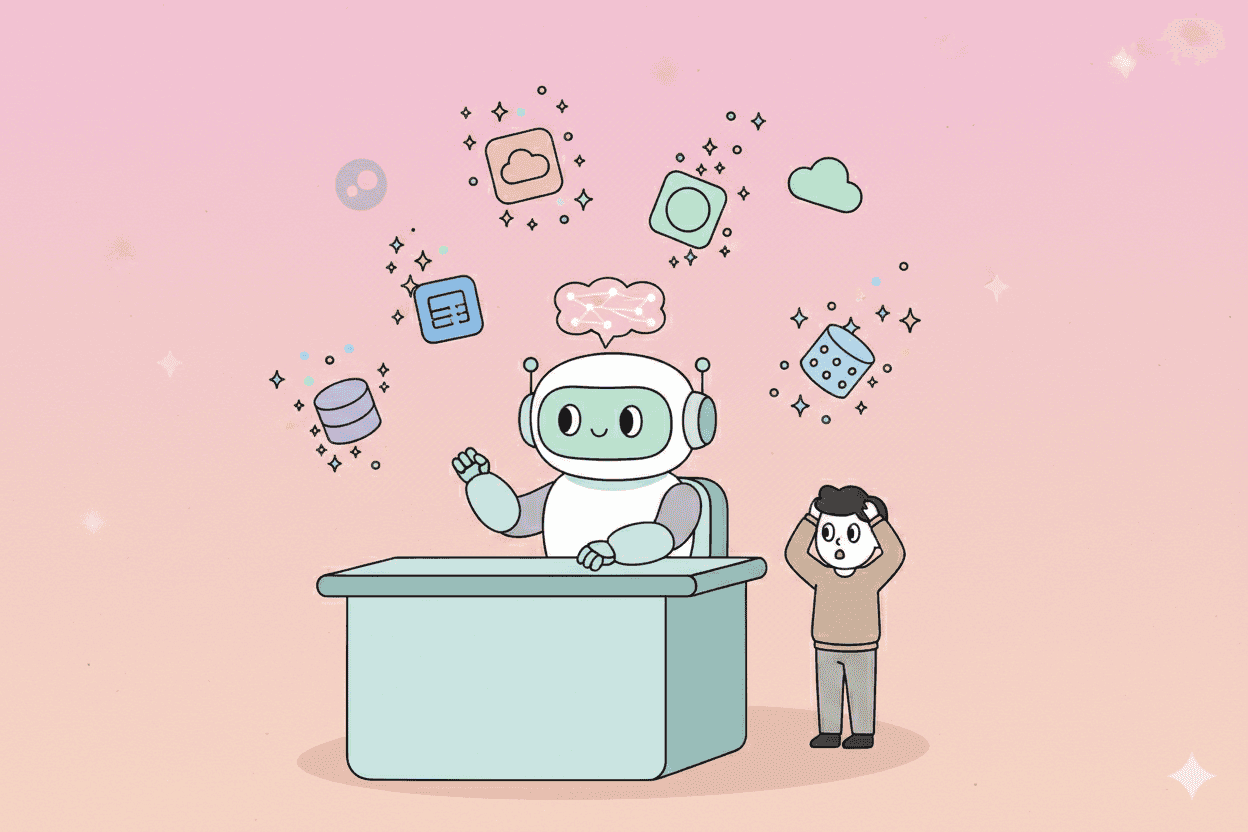
Last week, something interesting happened in the stock market. Salesforce, ServiceNow, and Oracle — the giants of enterprise software — saw their share prices tumble as investors suddenly realized that agentic AI might make their per-seat pricing model obsolete.
The culprits? Tools like Anthropic's Cowork, OpenAI's Frontier, and a growing ecosystem of AI agents that can now write code, manage workflows, and complete complex multi-step tasks — work that previously required expensive software subscriptions and the humans who knew how to use them.
If you're a product manager watching this unfold, you might feel a familiar pit in your stomach. The same technology that's disrupting Salesforce is coming for your product too.
But here's the thing: this isn't a crisis. It's a clarifying moment. The question isn't whether AI will change product development. It's whether your team understands customers deeply enough to build what AI can't replace.
The "SaaSPocalypse" Isn't Really About Software
When researchers at Stanford found that junior software engineering jobs have declined nearly 20% over three years, the headlines focused on AI replacing coders. But that misses the bigger picture.
What's actually happening is a shift in where value comes from. For decades, the value in SaaS came from the software itself — the features, the integrations, the workflow automation. Companies paid per seat because having access to the tool was the valuable thing.
Now? AI agents can build those tools on demand. As one analysis put it, "a user describes a business problem in plain language. Then agentic AI delivers a code solution that works with existing organisational systems."
If describing a problem gets you a working solution, the value shifts from the tool to understanding the problem in the first place.
This is where most product teams are dangerously unprepared.
The Feature Factory Trap
Most product teams operate like feature factories. Roadmaps are filled with things to build. Success is measured by shipping. Customer feedback, when it's collected at all, gets filtered through Jira tickets and quarterly surveys.
This model made sense when building features was hard and expensive. If coding took months and required specialized teams, then the features themselves were the moat.
But when AI can build a custom solution in hours, the moat evaporates. Your competitors aren't other product teams anymore — they're anyone with a clear understanding of what users need and access to an AI agent.
The product teams that will thrive aren't the ones shipping the most features. They're the ones who understand their customers so deeply that they spot problems before AI has enough context to solve them.
What "Understanding Customers" Actually Means Now
Here's where things get uncomfortable: most product teams think they understand their customers. They don't.
They understand what customers say they want. They understand the support tickets that get escalated. They understand the feedback from users loud enough to fill out surveys.
But research has consistently shown that the biggest opportunities come from unspoken needs — the friction customers don't articulate, the workflows they've given up trying to improve, the problems so normalized they don't even register as problems.
This is why surface-level "voice of customer" programs fail. Sending out NPS surveys doesn't uncover hidden needs. Neither does tagging support tickets. These tools measure what customers explicitly tell you. They miss what customers reveal when they're not trying to communicate anything at all.
The gold is in the thousands of small signals scattered across your customer touchpoints: the word choices in support emails that indicate frustration, the feature requests that cluster in a pattern you haven't noticed, the cancellation reasons that all point to the same underlying workflow breakdown.
No human team can process this at scale. And most "customer feedback" tools just organize the signals — they don't synthesize them into insight.
The New Competitive Advantage: Insight Velocity
The teams winning right now have what I'd call "insight velocity" — the speed at which they can turn raw customer signals into actionable understanding.
Low insight velocity looks like quarterly business reviews where someone presents a slide about "what customers are saying." The data is months old. The synthesis is shallow. By the time anyone acts on it, the landscape has changed.
High insight velocity looks like knowing, this week, that enterprise customers are increasingly frustrated with your onboarding flow — not because anyone complained, but because the language in their support conversations has shifted in a subtle but measurable way.
It looks like spotting a churn risk before the customer has consciously decided to leave. It looks like identifying a feature request pattern that suggests an entirely new product direction — while your competitors are still counting survey responses.
This is what separates product teams that will survive the AI disruption from those who'll be replaced by it.
The Irony of AI Helping You Beat AI
There's a delicious irony in all this: the same AI technology that's threatening traditional SaaS is also the best tool for developing deep customer understanding.
AI can process every support conversation, every sales call transcript, every feedback form, every cancellation interview — and find patterns no human would have time to notice. It can read between the lines of what customers say to understand what they mean.
This isn't about replacing customer research. It's about giving product teams superpowers they've never had before.
Imagine knowing, in real-time, what's actually causing churn — not what customers say in exit surveys, but what the data reveals about their behavior patterns before they leave. Imagine identifying the voice of customer themes that matter most to retention, without waiting for a quarterly report. Imagine prioritizing your roadmap based on quantified customer pain, not the loudest voices in the room.
This is what AI-powered customer insight tools enable. And it's why the product teams investing in this capability now will have an almost unfair advantage over those who don't.
Practical Steps for Product Teams
If you're a product leader reading this, here's what I'd focus on:
Stop treating customer feedback as a filing system. The value isn't in organizing signals — it's in synthesizing them into insight. If your current tools just help you tag and search feedback, you're leaving enormous value on the table.
Invest in understanding, not just building. Every hour spent deeply understanding customer problems is worth ten hours of building the wrong feature. Reallocate time accordingly.
Look for patterns across sources. Your support team, sales team, customer success team, and product analytics all see different parts of the same customer experience. The insights live in the connections between these sources, not within any single one.
Measure insight velocity. How long does it take for a pattern in customer behavior to become actionable knowledge for your product team? Shorten that cycle relentlessly.
Automate the synthesis, not just the collection. AI should be summarizing, connecting, and surfacing insights — not just organizing data for humans to process manually.
The Future Belongs to the Obsessed
The SaaS disruption happening right now is really a filter. It's separating companies that exist because they ship features from companies that exist because they understand customers.
Features can be commoditized. Understanding cannot.
The product teams that will thrive in the AI era are those obsessed with customer insight — who see every interaction as data, who invest in the systems to process that data at scale, and who build only what the data tells them matters.
Everyone else is building products that AI will eventually replace.
The choice is yours.
Pelin helps product teams turn customer conversations into actionable insights. Instead of drowning in feedback from Intercom, Slack, Zendesk, and dozens of other sources, Pelin uses AI to surface the patterns that matter — so you can build what customers actually need. Learn more about how it works.