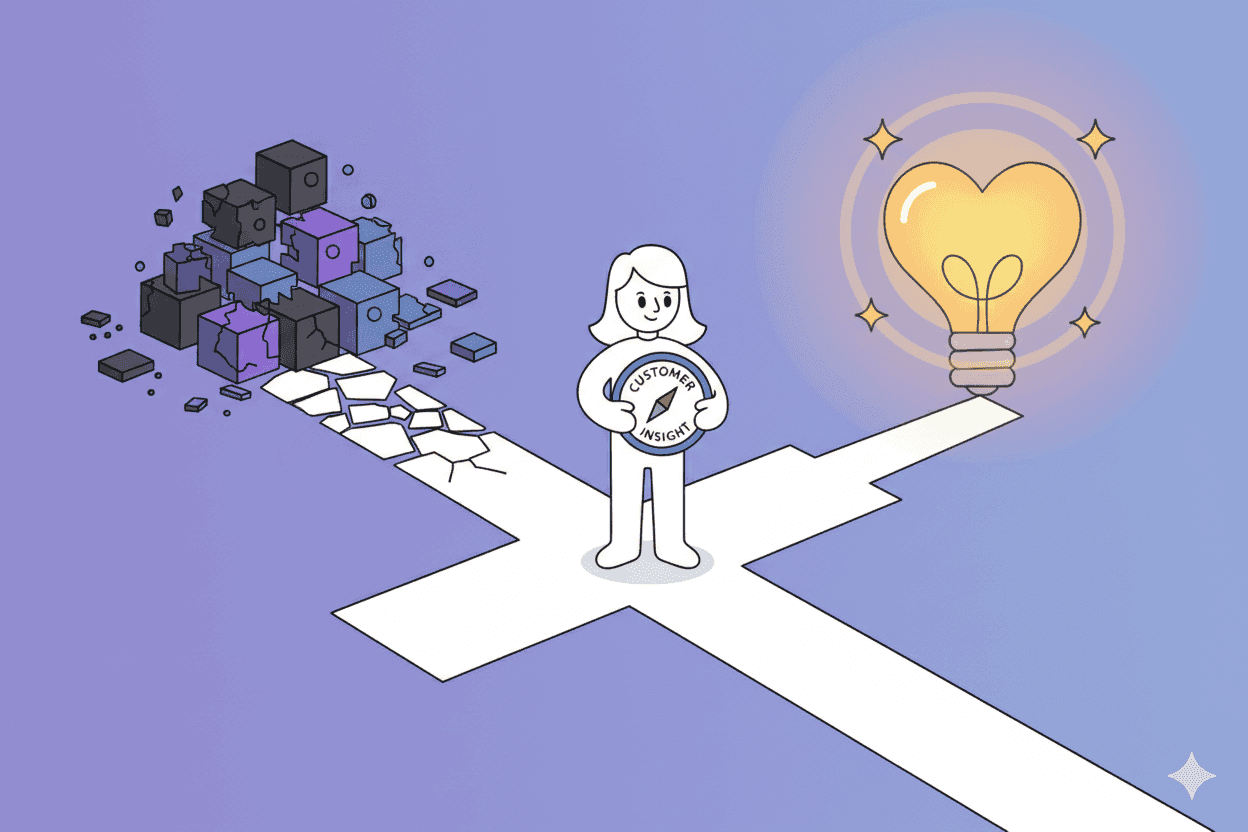
Last week, software stocks lost nearly $1 trillion in market value. The trigger? Another AI product launch from Anthropic. The pattern is now predictable: AI company ships new capability, SaaS stocks crater. Rinse, repeat.
Welcome to what analysts are calling the SaaSpocalypse.
The End of "Build vs. Buy" As We Knew It
For decades, the "build vs. buy" decision tilted heavily toward buy. Building software was expensive, time-consuming, and risky. SaaS vendors thrived on this equation—pay us per seat, and we'll handle the complexity.
But something fundamental has shifted.
"The barriers to entry for creating software are so low now thanks to coding agents, that the build versus buy decision is shifting toward build in so many cases," venture investor Lex Zhao told TechCrunch.
Tools like Claude Code can now replicate not just core SaaS features, but the add-ons vendors relied on for upsells. When building software becomes almost free, what happens to the $750B SaaS market built on the assumption that building is hard?
Klarna showed us the answer back in 2024 when they replaced Salesforce with homegrown AI. The result: their stock soared while Salesforce's stumbled. Other companies took note.
The Real Question Nobody's Asking
Here's what's strange about the SaaSpocalypse panic: everyone's focused on whether AI can build software. Almost nobody's asking the more important question.
What should you build?
AI can generate code at superhuman speed. It can replicate features in hours that took years to develop. But it can't tell you which features matter. It can't tell you which problems to solve. It can't tell you what your customers actually need.
That knowledge comes from somewhere else entirely: deep, systematic understanding of your customers.
Features Are Commodities. Customer Insight Is Not.
Consider this: if two companies can both spin up a CRM in a weekend using AI, what differentiates them? The interface? That's trivial to copy. The integrations? Also easy. The underlying technology? Practically identical.
The only sustainable differentiator is understanding what customers actually need—and building that understanding into every decision.
As F-Prime investor Abdul Abdirahman put it: "This may be the first time in history that the terminal value of software is being fundamentally questioned."
He's right. But he's also pointing toward the answer: if software has no terminal value, what does?
Customer relationships. Customer trust. Customer insight.
The Irony of AI-Native Startups
Here's an irony: the AI-native startups that are supposedly disrupting SaaS? They're growing faster than ever—some hitting $10M ARR in three months.
But dig deeper into the successful ones, and you'll find something consistent: they're fanatically focused on customer feedback. They're not building features—they're solving problems. They iterate based on what users actually say, not what they assume.
The AI made building faster. But the winners still won by understanding customers better.
Why Voice of Customer Matters More, Not Less
In the old world, slow development cycles forced companies to be selective. You couldn't build everything, so you had to prioritize. Bad prioritization hurt, but there was time to course-correct.
In the AI-accelerated world, you can build anything—which makes knowing what to build critical. Build the wrong thing, and you've wasted cycles your competitor didn't. Move fast in the wrong direction, and you just moved farther from your customers.
This is why Voice of Customer (VoC) infrastructure has become essential:
Speed amplifies mistakes. When you can ship features in hours instead of months, a wrong decision doesn't just cost time—it burns customer trust at unprecedented speed.
Competition is instantaneous. If your competitor can replicate any feature you build, your only advantage is knowing which features matter. That comes from customer insight.
Outcome-based pricing demands outcomes. Sierra, the AI customer service startup from former Salesforce CEO Bret Taylor, charges based on outcomes, not seats. They hit $100M ARR in under two years. Why? Because when you charge for results, you're forced to actually deliver them—which requires understanding what customers need.
What the SaaSpocalypse Survivors Will Look Like
Aaron Holiday of 645 Ventures put it best: "This isn't the death of SaaS. It's the beginning of an old snake shedding its skin."
The survivors won't be companies with the best technology—technology is commodified. They'll be companies with:
Systematic customer feedback loops. Not annual surveys. Not NPS scores in isolation. Continuous, structured capture of what customers say, want, and do.
AI-powered insight synthesis. The irony: AI disrupts SaaS, but AI also helps process the massive volume of customer feedback that modern products generate. The winners use AI to understand customers, not just to build features.
Ruthless prioritization based on evidence. When you can build anything, discipline becomes your edge. That discipline comes from customer insight, not intuition.
Speed to insight, not just speed to ship. Fast deployment is table stakes. Fast understanding of what's working and what isn't—that's rare.
The Practical Takeaways for Product Teams
If you're a PM watching SaaS stocks crater and wondering what this means for your roadmap, here's the actionable part:
1. Build your customer feedback infrastructure now.
Every customer touchpoint generates signal: support tickets, sales calls, feature requests, reviews, churned customer interviews. Most companies capture fragments of this. Few synthesize it systematically.
The companies that survive the SaaSpocalypse will be the ones that can answer "why are customers churning?" or "what feature would retain this segment?" with data, not guesses.
2. Stop treating feedback as a backlog item.
Customer insight isn't something you process when you have time. It's strategic infrastructure. Treat it like you'd treat your data pipeline or your deployment tooling.
3. Use AI to understand, not just to build.
The same AI that's disrupting your market can help you understand your customers at scale. Pattern recognition across thousands of support tickets. Sentiment analysis across reviews. Synthesis of user interviews.
If you're only using AI to write code, you're missing half the equation.
4. Make customer insight a shared resource.
Product, engineering, design, marketing, sales, support—they all talk to customers. Most companies keep these conversations siloed. The winners will connect them.
The Deeper Point
The SaaSpocalypse is real. AI will commoditize features. Per-seat pricing will decline. The build-vs-buy equation has permanently shifted.
But this isn't a story about destruction. It's a story about what happens when the how of building software becomes trivial, and the what becomes everything.
The companies that understand their customers—deeply, systematically, continuously—will be the ones left standing when the dust settles.
Everyone can build now. Can you understand?
At Pelin, we help product teams turn customer feedback into actionable insights. Because in a world where AI can build anything, knowing what to build is the only moat that matters.