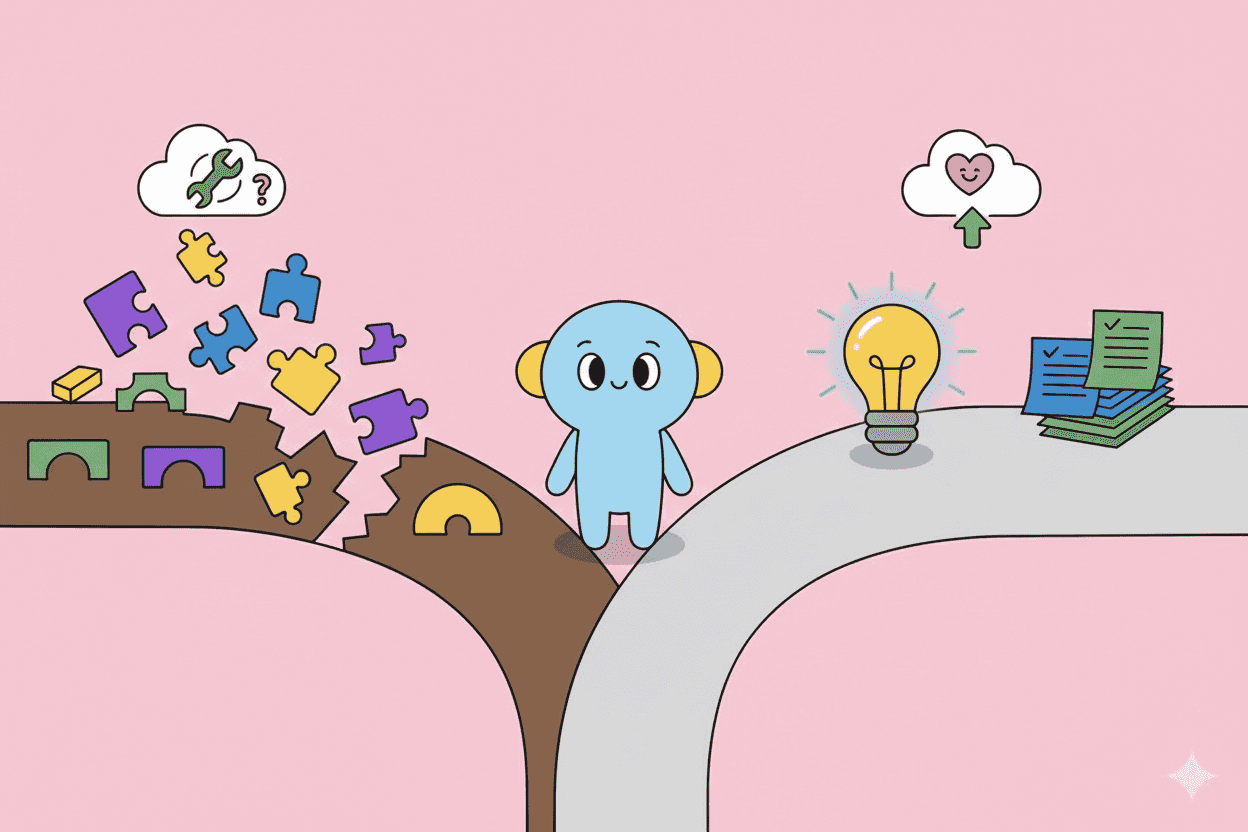
Something remarkable is happening in enterprise software right now. Software stocks are tanking. Product teams are abandoning their vendor subscriptions. And executives everywhere are asking the same question: "Can we just build this ourselves?"
Welcome to the SaaSpocalypse.
The Great Replatforming
Last week, Mistral AI CEO Arthur Mensch dropped a bombshell at the AI Impact Summit in New Delhi. "More than half of what's currently being bought by IT in terms of SaaS is going to shift to AI," he told CNBC. "AI is making us able to develop software at the speed of light."
The numbers back him up. According to Retool's 2026 Build vs. Buy Report, 35% of enterprises have already replaced at least one SaaS tool with custom-built software. Even more striking: 78% expect to build more of their own tools this year.
The iShares Expanded Tech-Software Sector ETF is down more than 20% in 2026. Traditional SaaS vendors are watching their market caps evaporate as investors flee toward "AI-native" solutions. The Wall Street narrative is clear: SaaS is dead, long live custom builds.
But here's what nobody seems to be talking about: Building software faster doesn't mean you're building the right software.
The Real Problem Isn't Build vs. Buy
Retool CEO David Hsu explained the economics perfectly: "Two years ago, a custom internal tool might take an engineering team weeks and cost six figures. Today, a business operations lead with the right platform can have a working prototype in a day or two."
Great. Wonderful. Revolutionary, even.
But let me ask you something: How many of those prototypes solve actual customer problems?
The Retool report reveals a fascinating statistic buried beneath the headline numbers: 60% of builders created tools outside of IT oversight in the past year. David Hsu calls this "a demand signal." I'd call it something else: a warning sign.
When teams build software without proper oversight, they're often building based on assumptions. Internal hunches. That one loud stakeholder's opinion. The feature request that landed in Slack last Tuesday.
This isn't unique to DIY software. It's the same reason so many purchased SaaS tools end up abandoned—they were never the right solution in the first place.
The Assumption Trap
Here's a story that plays out in every organization, every week:
- A product manager hears about a pain point from a customer
- They assume this represents a widespread problem
- They build (or buy) a solution
- Three months later, they discover only 4% of customers actually needed it
Whether you're writing code with AI assistance or purchasing a SaaS subscription, the fundamental question remains: Do you actually understand what your customers need?
Bernard Golden, writing in Business Insider, pointed out something that enterprise AI enthusiasts consistently miss. Bringing software to market requires "domain expertise, education, support, product management, financial negotiation, and legal immunization." Code is the easy part.
But before all of that comes something even more fundamental: understanding the problem you're solving.
The Measurement Gap
Here's the most alarming finding from the Retool report: 37% of organizations haven't established AI productivity metrics.
Think about that. More than a third of companies are building custom software without any clear way to measure whether it's working.
"You can't prove ROI on what you don't measure," Hsu warned. But the measurement challenge goes deeper than productivity metrics. If you're not systematically capturing customer feedback, support tickets, sales conversations, and usage patterns, you're building blind.
This is where the SaaSpocalypse gets interesting. The debate between building and buying is a distraction. The real differentiator isn't whether you code it yourself or license it from a vendor. It's whether you have the customer insights to know what "it" should be in the first place.
What Winning Looks Like
Let me be provocative for a moment: I don't think the SaaSpocalypse will be defined by who builds versus who buys. I think it will be defined by who listens versus who assumes.
The companies that thrive in this new landscape will share a common trait. They'll have systematic ways of understanding:
- What problems customers are actually experiencing
- Which feature requests represent real demand versus vocal minorities
- Where their product creates confusion or friction
- What their competitors are getting right
- Which customer segments are at risk of churning
This isn't about collecting more data. Every company is drowning in customer feedback scattered across Intercom, Zendesk, Slack, Gong calls, NPS surveys, and that one spreadsheet from 2023 that nobody updates anymore.
The winners will be the ones who can synthesize all of that noise into actionable insights. Who can spot patterns across thousands of touchpoints. Who can distinguish between what customers say they want and what they actually need.
The Build vs. Buy False Dichotomy
Harvard Business School professor Suraj Srinivasan recently noted that organizations face an "implementation gap between AI's capabilities and what they are prepared to deploy." Companies are cautious about privacy, customer harm, and safety risks.
"But that means you cannot get the most value from the technology," he said.
There's a parallel implementation gap in how companies collect and use customer insights. The capability exists to understand your customers at unprecedented depth. AI can analyze support tickets, call transcripts, feature requests, and user behavior patterns to surface insights that would take human analysts months to uncover.
But most companies aren't doing this. They're still relying on quarterly NPS surveys, occasional customer interviews, and the loudest voices in the room.
Whether you're building custom tools or evaluating SaaS purchases, the starting point should be the same: What does your customer data actually tell you? Not what you assume. Not what that one enterprise account demanded in their last QBR. What does the full picture reveal?
Practical Takeaways for Product Teams
If you're a product leader navigating the SaaSpocalypse, here's what I'd recommend:
1. Audit your customer insight sources. Make a list of every place customer feedback lives: support tools, sales CRMs, call recording platforms, community forums, social media, user research repositories. How much of this data is actually informing your decisions?
2. Look for patterns, not anecdotes. That passionate feature request from your biggest customer might represent a universal need—or it might be an edge case. You can't tell without systematic analysis.
3. Connect the dots across channels. A customer might mention a pain point in a support ticket, reference it again on a sales call, and eventually churn because of it. Can you see that journey?
4. Prioritize with data. Before building anything—custom or purchased—know which problems affect the most customers, cause the most friction, and represent the biggest opportunities.
5. Measure outcomes, not outputs. Whether you build a tool in two days or buy a solution from a vendor, the question is the same: Did it solve the customer problem you identified?
The Opportunity in the Chaos
The SaaSpocalypse is real. Software economics are fundamentally changing. The cost of building is collapsing while the cost of buying remains flat.
But amidst all the panic selling and hot takes about AI replacing SaaS, there's an enormous opportunity hiding in plain sight.
Most companies have everything they need to understand their customers deeply. The data exists. The conversations have been recorded. The feedback has been collected. It's just scattered, siloed, and impossible to synthesize at scale.
The companies that figure out how to turn that chaos into clarity will win—whether they build their tools from scratch or buy them off the shelf.
Because at the end of the day, the SaaSpocalypse isn't about technology. It's about whether you actually understand the people you're building for.
The tools are getting cheaper. The question is whether you know what to build.
Building products without systematic customer insights is like coding without requirements—technically impressive, strategically useless. Pelin helps product teams synthesize feedback from every channel into actionable intelligence, so you can build what customers actually need.