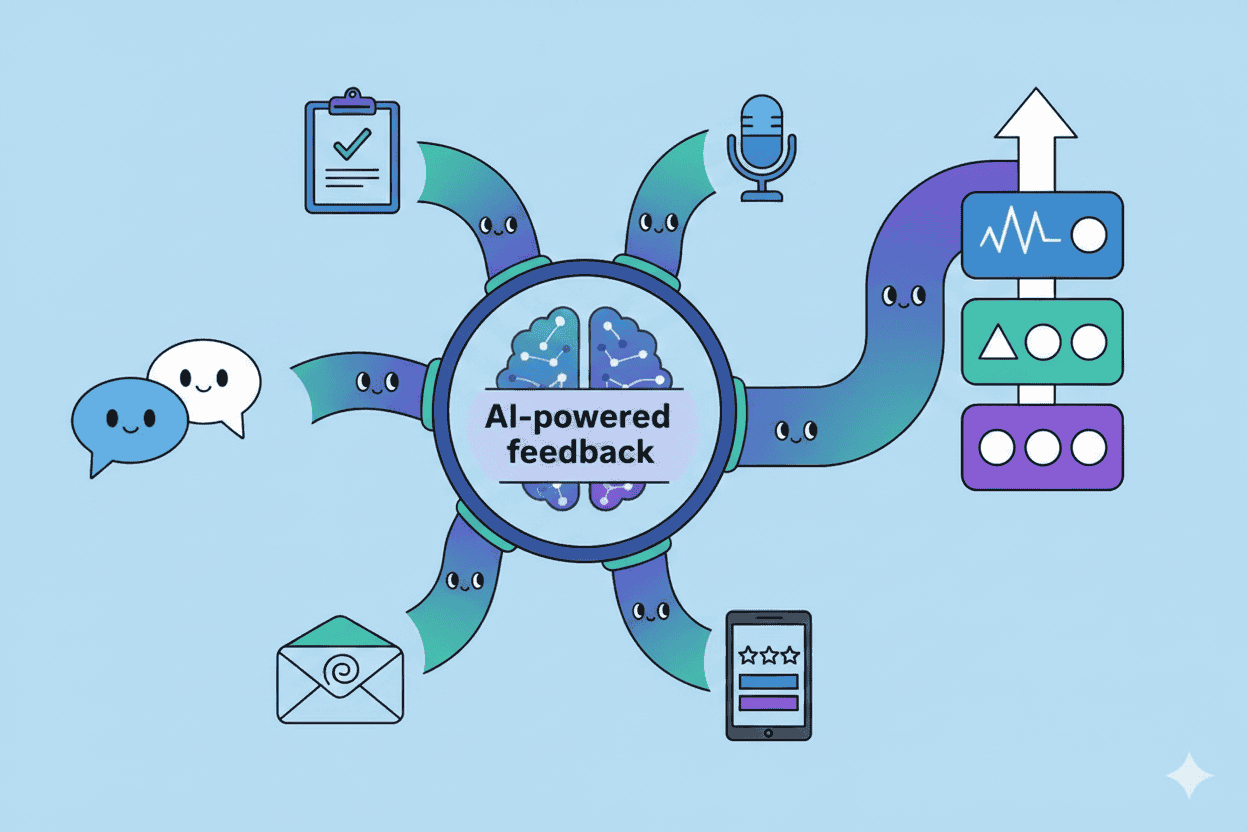
When Atlassian quietly acquired Cycle last September, it wasn't just another tech acquisition. It was a declaration: the era of building products based on gut feeling is officially over.
Cycle, the French AI-powered feedback platform, had become the secret weapon for product-led companies like Brex, Qonto, and Alan. Now its technology is being woven directly into Jira Product Discovery, bringing AI-powered customer insights to Atlassian's 300,000+ customers.
But here's what makes this interesting for every product team, regardless of the tools you use: it validates something many of us have known for years. Customer feedback isn't just "nice to have." It's the difference between building something people love and shipping features nobody asked for.
The Problem Atlassian Is Trying to Solve
Let's be honest about the state of product management in 2026.
According to Atlassian's own State of Product Report, 84% of product managers expect their products to fail. Not because they can't ship—shipping has never been easier. But because they're not confident they're building the right thing.
That's a stunning admission. The vast majority of people responsible for deciding what gets built aren't sure their decisions are correct.
And it makes sense when you look at how most teams actually work. Your customer feedback lives in at least a dozen different places right now:
- Support tickets in Zendesk
- Feature requests in a Notion doc someone started in 2023
- Sales call recordings nobody has time to watch
- Slack channels with 47 unread messages
- A Google Sheet labeled "Feedback" that hasn't been updated in months
- App store reviews you check once a quarter
- Twitter mentions you pretend don't exist
According to industry benchmarking data, companies that systematically collect and act on customer input retain customers at measurably higher rates than those relying on ad-hoc methods. Yet most product teams still don't have a centralized system connecting what users say to what gets built.
The Atlassian-Cycle deal is an attempt to fix this. By embedding AI-powered feedback directly into Jira Product Discovery, teams can theoretically go from scattered insights to prioritized roadmaps without the manual grunt work.
Why AI Changes Everything About Feedback
Here's where things get interesting. The traditional approach to customer feedback was fundamentally unscalable.
Someone had to manually read through support tickets, categorize feature requests, tag sentiment, spot patterns, and synthesize everything into a deck for leadership. That "someone" was usually an overworked PM who did this in their spare time—which is to say, it rarely happened systematically.
AI changes the equation completely.
Modern feedback tools can now:
- Auto-tag themes from thousands of support tickets in minutes
- Extract sentiment from call transcripts without anyone listening to them
- Surface patterns across channels (Slack, email, reviews, support) automatically
- Predict churn risk based on feedback trends
- Generate summaries of what customers actually want
A recent analysis of customer feedback tools shows that AI-powered analytics platforms like Enterpret and Chattermill can process feedback at scale with sentiment analysis and theme detection that improves over time. The manual spreadsheet approach simply can't compete.
This is exactly what Cycle brought to the table. As Tanguy Crusson, Head of Product for Jira Product Discovery at Atlassian, put it: "They've built an impressive product that connects feedback with customers and uses AI to distill it into actionable insights."
The keyword there is "actionable." Raw feedback is noise. Actionable insights are signal.
What This Means for Your Product Team
Whether you use Jira or not, the Atlassian-Cycle acquisition signals a broader shift in how product work gets done. Here's what you should be thinking about:
1. Scattered Feedback Is a Competitive Disadvantage
If your customer insights are spread across twelve different tools with no connection to your roadmap, you're making decisions in the dark. Your competitors who have this figured out will build better products, faster.
The fix isn't necessarily one specific tool. It's having some system that captures feedback from wherever it lives and surfaces patterns you can act on.
2. AI Isn't Optional Anymore
Nearly one-third of PMs already use AI weekly for research, analytics, and customer feedback, according to Atlassian's data. The teams that aren't using AI for this are falling behind.
Think about it: if your competitor can process 10,000 customer conversations and extract the top five feature requests in an afternoon, while you're still manually reading through 200 support tickets, who's going to understand their customers better?
3. Speed Without Clarity Gets You Nowhere Faster
This is perhaps the most important insight from Atlassian's research. AI has made it faster and cheaper to build software. But shipping the wrong thing faster is worse than shipping the right thing slowly.
The teams that will win in 2026 and beyond aren't the fastest coders. They're the ones with the clearest understanding of what customers actually need.
4. Closing the Loop Matters
One of Cycle's key features was letting customers know when their feedback was addressed. This sounds small, but it's huge for retention and trust.
When customers feel heard—when they can see their feedback actually influenced your roadmap—they become advocates. They stick around longer. They forgive more bugs. They tell their friends.
The Practical Playbook
So what should you actually do about all this? Here's a framework for getting your customer feedback under control:
Step 1: Audit Your Current State
Where does feedback currently live? Make a list of every channel, tool, and touchpoint where customers tell you things. Include:
- Support tickets
- Sales call recordings
- Product reviews
- Social mentions
- Feature request boards
- NPS/CSAT surveys
- Customer success notes
- Community forums
Most teams are shocked when they see how fragmented this really is.
Step 2: Pick a Central Hub
You need one place where feedback gets synthesized and connected to your roadmap. This could be:
- A dedicated feedback tool (Canny, UserVoice, Pelin)
- An AI-powered analytics platform (Enterpret, Chattermill)
- Jira Product Discovery (especially now with Cycle's capabilities)
- Even a well-structured Notion database if you're scrappy
The specific tool matters less than having something that creates a single source of truth.
Step 3: Automate the Ingestion
Manually copying feedback from Zendesk into your roadmap tool is not sustainable. Look for integrations that pull insights automatically from:
- Your CRM
- Support ticketing system
- Call recording tools
- Community platforms
- Review sites
The goal is to reduce friction so feedback actually flows into your system.
Step 4: Use AI to Surface Patterns
This is where modern tools earn their keep. You shouldn't be manually tagging hundreds of feature requests. AI should:
- Cluster similar requests together
- Identify trending topics
- Flag sentiment shifts
- Surface high-impact opportunities
If your current tool doesn't do this, it's time for an upgrade.
Step 5: Connect Insights to Roadmap
The final piece is linking customer insights directly to the features you're planning. When someone asks "why are we building this?", you should be able to point to specific feedback, the number of customers who requested it, and the potential impact.
This is the difference between opinion-driven development and evidence-driven development.
The Bottom Line
Atlassian acquiring Cycle isn't just news for Jira users. It's a signal that the industry has recognized a fundamental truth: product teams need systematic, AI-powered customer feedback to build the right things.
The 84% of PMs who expect their products to fail? They don't have to be in that group. The fix isn't working harder or shipping faster. It's listening smarter.
The tools exist. The AI is good enough. The only question is whether you'll adopt this approach before your competitors do.
Building a product and drowning in feedback? Pelin uses AI to turn scattered customer conversations into clear, prioritized insights. No more spreadsheets. No more guessing.