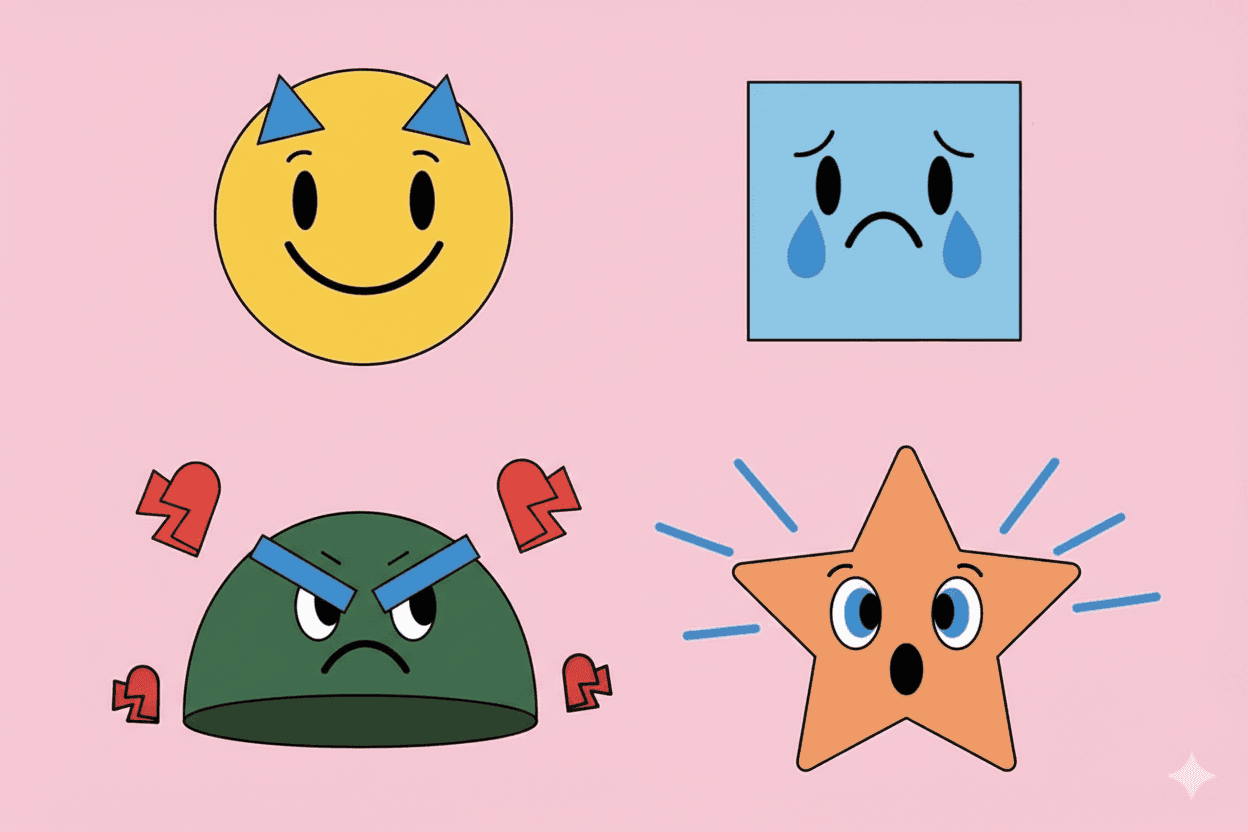
Customer feedback contains two layers of information: what customers say and how they feel. A bug report stating "Export functionality is broken" reads differently than "I'm incredibly frustrated—export has been broken for weeks and is costing us hours daily." Same issue, vastly different emotional intensity. Sentiment analysis helps product teams understand not just problems but urgency, prioritize based on emotional impact, and detect early warning signals before dissatisfaction triggers churn. This guide shows you how to leverage sentiment analysis for better product decisions.
What Sentiment Analysis Reveals
Beyond basic positive/negative classification, sophisticated sentiment analysis uncovers:
Emotional intensity: Mildly annoyed vs. extremely frustrated. Slightly pleased vs. delighted.
Specific emotions: Frustration, confusion, excitement, disappointment, appreciation, anger.
Sentiment trends: Is sentiment improving or declining over time? For specific features or customer segments?
Risk signals: Declining sentiment predicts churn before customers cancel.
Delight opportunities: What creates positive sentiment? Double down on these strengths.
Priority indicators: High-frequency issues with intense negative sentiment need immediate attention. High-frequency issues with mild sentiment can wait.
Types of Sentiment Analysis
Basic Sentiment Classification
Categorizes text as positive, neutral, or negative:
- "I love this feature" → Positive
- "Export is broken" → Negative
- "I tried the new dashboard" → Neutral
Strengths: Simple, fast, scalable to thousands of inputs.
Limitations: Misses nuance. "Not bad" reads negative due to "not" and "bad" but expresses mild positivity.
Polarity and Intensity
Adds magnitude to basic classification:
- Strongly positive (+2)
- Positive (+1)
- Neutral (0)
- Negative (-1)
- Strongly negative (-2)
This distinguishes "It's fine" (+0.5) from "It's amazing!" (+2.0).
Emotion Detection
Identifies specific emotions beyond positive/negative:
- Joy, excitement, delight
- Frustration, anger, annoyance
- Confusion, uncertainty
- Disappointment, sadness
- Fear, anxiety (especially around data security, reliability)
- Surprise (positive or negative)
Use case: "I'm confused about how reporting works" signals different response than "I'm frustrated reporting is so slow." Both negative, but confusion needs education while frustration needs product improvement.
Aspect-Based Sentiment
Analyzes sentiment toward specific product aspects:
- "I love the design (positive) but performance is terrible (negative)"
- Design: +2, Performance: -2
This prevents overall neutral score from masking that customers appreciate one thing while hating another.
Sentiment Trends
Tracks how feelings evolve:
- Week-over-week sentiment changes
- Before/after feature release comparisons
- Cohort sentiment differences (new users vs. tenured)
- Seasonal patterns
Application: If sentiment about onboarding declined after recent redesign, investigate whether changes helped or hurt.
AI-Powered vs. Rule-Based Sentiment
Rule-based systems use dictionaries of positive/negative words and linguistic rules. Simple but limited:
- Struggles with sarcasm, context, domain language
- Misses intensity variations
- Can't learn or improve
Machine learning models learn from examples:
- Better at context, nuance, sarcasm
- Understands domain-specific language with training
- Improves with feedback
- Handles complex sentence structures
Modern platforms like Pelin.ai use ML models trained on product feedback achieving 90%+ sentiment accuracy.
Practical Applications
Prioritization Enhancement
Combine sentiment with frequency for smarter prioritization:
| Issue | Frequency | Sentiment | Priority |
|---|---|---|---|
| Export bugs | 50 mentions | -1.8 (very negative) | Critical |
| Dashboard requests | 45 mentions | +0.5 (mild positive) | Medium |
| Mobile app | 40 mentions | -0.8 (moderate negative) | High |
| Integrations | 35 mentions | +1.5 (positive) | Low (maintain) |
Export ranks highest despite not having most mentions because negative intensity signals urgency.
Churn Prediction
Declining sentiment predicts churn:
- Customer starts positive (+1.2 average sentiment)
- Sentiment drops to neutral (0.2) after encountering problems
- Further decline to negative (-0.7) indicates high churn risk
- Intervention opportunity between neutral and negative phases
Platforms like Pelin.ai automatically track per-customer sentiment trends, enabling proactive outreach before cancellation.
Feature Success Measurement
Post-launch sentiment validates whether features succeed:
- New feature ships
- Track sentiment in feedback mentioning it
- Positive sentiment confirms success
- Negative sentiment reveals implementation issues
- Neutral sentiment suggests limited interest or confusion
Compare sentiment before and after releases to measure impact.
Segment-Specific Analysis
Sentiment patterns often vary by segment:
- Enterprise customers express frustration about admin controls (-1.5 avg)
- SMB customers love ease of use (+1.8 avg)
- New users confused by onboarding (-0.6 avg)
- Power users delighted by advanced features (+2.1 avg)
Segment-specific sentiment informs targeted improvements rather than one-size-fits-all changes.
Competitive Intelligence
Sentiment in competitive mentions reveals positioning:
- "Switched from Competitor X—much happier here" (positive competitive)
- "Evaluating Competitor Y which has Feature Z" (negative competitive)
- "Similar to Competitor A but better onboarding" (positive differentiation)
Track competitive sentiment to understand your positioning strength.
Implementation Best Practices
Validate AI sentiment: Spot-check samples to ensure accuracy. AI might misread domain-specific language initially.
Track intensity, not just direction: "Not bad" and "absolutely amazing" are both positive but dramatically different.
Analyze changes, not just absolutes: Sentiment declining from +1.5 to +0.5 matters even though both are positive.
Combine with other signals: Sentiment plus frequency plus segment plus recency creates complete picture.
Close the loop: When negative sentiment drives product changes, inform affected customers. This converts frustration to appreciation.
Look for patterns: Single negative mention is noise. Pattern of negative sentiment about same topic is signal.
Consider context: Negative sentiment about bugs differs from negative sentiment about missing features. Response strategies differ.
Setting Sentiment Thresholds
Define action triggers:
Critical: Average sentiment < -1.5 or rapid decline (>1.0 point drop in 30 days) → Immediate investigation, potential emergency fix
High: Average sentiment -1.0 to -1.5 or steady decline → Prioritize in next sprint, investigate root cause
Medium: Average sentiment -0.5 to -1.0 → Monitor, include in quarterly planning
Low: Negative sentiment but limited frequency or intensity → Track but don't prioritize
Positive: Maintain or enhance. Don't break what customers love.
Common Pitfalls
Sarcasm blindness: "Oh great, another bug" expresses negativity through faux positivity. Humans catch this; AI sometimes misses.
Volume fixation: 100 pieces of mild negative feedback might matter less than 10 pieces of extreme negative feedback.
Echo chamber: Sentiment from vocal minorities might not represent silent majorities. Balance qualitative sentiment with quantitative metrics.
Sentiment averaging: Overall average sentiment might mask that some features have strong positive sentiment while others have strong negative. Use aspect-based analysis.
Ignoring neutrals: Neutral sentiment isn't nothing—it's ambivalence. Investigate why customers don't feel strongly.
Cultural differences: Sentiment expression varies by culture. North American feedback tends toward extremes; some cultures express dissatisfaction more subtly.
Tools and Technology
Pelin.ai: Comprehensive feedback analysis including sentiment across all sources. Product-focused with churn risk detection. Integrates with 20+ platforms.
MonkeyLearn: Customizable text analysis including sentiment. Good for teams wanting control over models.
Lexalytics: Enterprise sentiment analysis for large-scale text processing.
AWS Comprehend / Google Cloud Natural Language: Cloud APIs for sentiment analysis. Require technical implementation.
Brandwatch / Sprinklr: Social media sentiment monitoring. Good for brand reputation but less product-specific.
Most modern feedback platforms include sentiment analysis built-in. For comprehensive approaches, see customer feedback analysis guide.
Measuring Sentiment Program Success
Process metrics:
- Sentiment categorization accuracy (spot-check validation)
- Coverage (percentage of feedback analyzed for sentiment)
- Response time to negative sentiment spikes
Action metrics:
- Product decisions influenced by sentiment analysis
- Customer outreach triggered by declining sentiment
- Features adjusted based on sentiment feedback
Outcome metrics:
- Sentiment trend improvements over time
- Churn reduction from sentiment-driven interventions
- Satisfaction score correlations with sentiment analysis
The goal isn't perfect sentiment detection—it's better product decisions informed by how customers feel.
Getting Started
-
Choose a tool: Start with platform offering sentiment analysis. Pelin.ai provides product-focused sentiment across all feedback sources.
-
Baseline current sentiment: Analyze past month of feedback to establish starting point.
-
Define action thresholds: What sentiment levels trigger different responses?
-
Track one product area: Focus sentiment analysis on specific feature or workflow initially.
-
Take one action: Identify highest negative sentiment issue and address it.
-
Measure impact: Did addressing the issue improve sentiment? By how much?
-
Expand coverage: Apply sentiment analysis to more feedback categories and product areas.
-
Integrate into processes: Make sentiment a standard input to prioritization and roadmap decisions.
Sentiment analysis transforms customer feedback from information into intelligence—understanding not just what customers say but how urgently they need solutions.
Related Articles
- Customer Feedback Analysis: Complete Guide - Master the analysis framework
- Aggregating Feedback Across Channels - Centralize customer input
- Voice of Customer Strategy - Build a comprehensive VoC program
- Feedback Categorization Best Practices - Organize feedback effectively
- Sentiment Analysis for Product Teams - Understand customer emotions
- Turning Support Tickets Into Product Insights - Extract value from support data
Understand Customer Sentiment with Pelin
Pelin.ai automatically analyzes sentiment across all feedback sources, tracks trends by customer and segment, and identifies declining sentiment before customers churn.
Stop guessing how customers feel. Start knowing. Request Free Trial.